


Discover Bologna
Bologna la Dotta, la Rossa, la Grassa
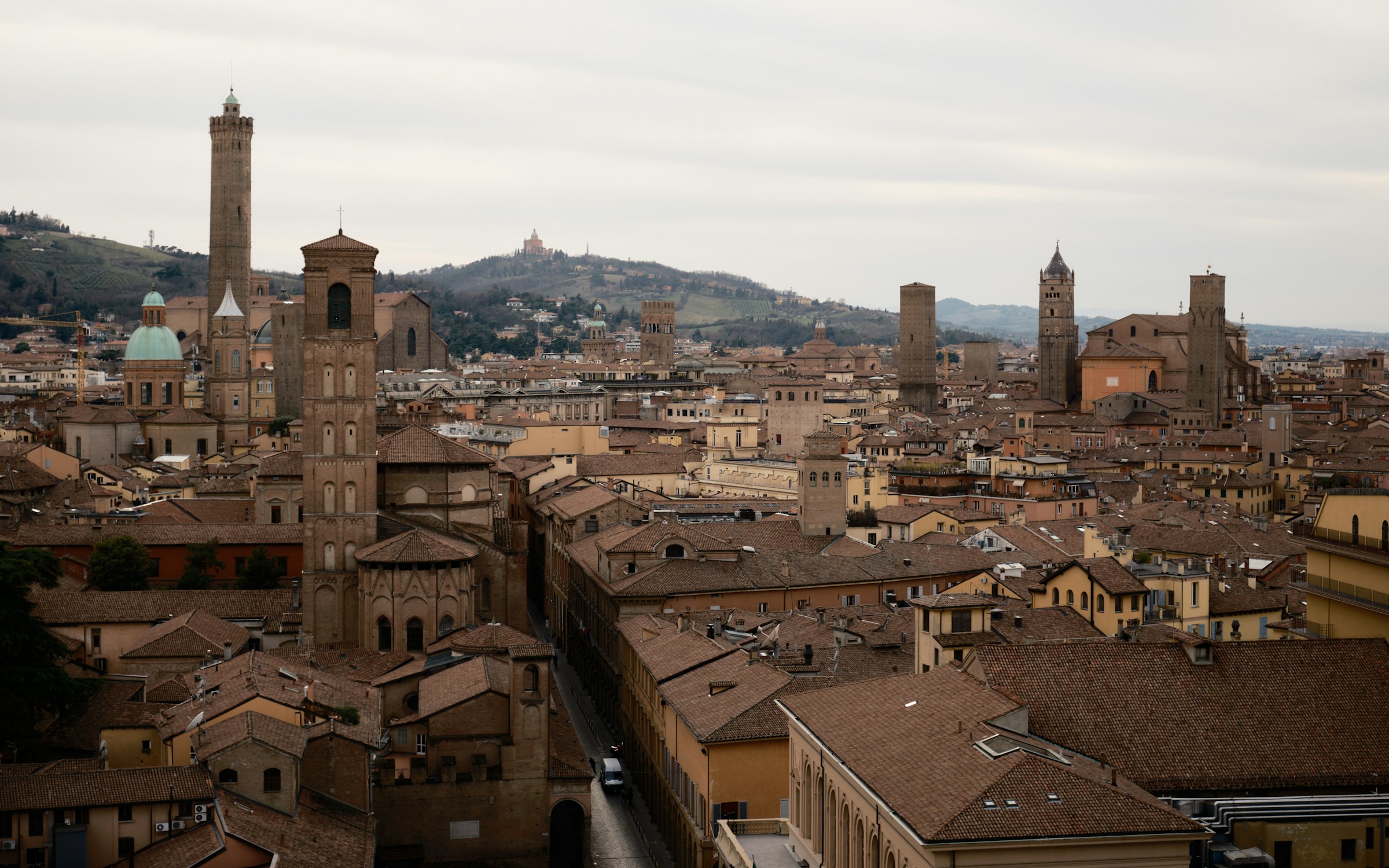
Bologna, the capital of Emilia-Romagna, hosts the oldest university in the world and is famous for its towers, as well as its long porticoes and a well-preserved historic center, among the most beautiful and extensive in Italy. But Bologna is also much more.
The oldest university in the world
The Alma Mater Studiorum - University of Bologna has very ancient origins that indicate it as the first university in the Western world, whose foundation dates back to 1088. Its history is intertwined with that of great figures who worked in science and literature and is an essential reference in the panorama of European culture.
Two towers
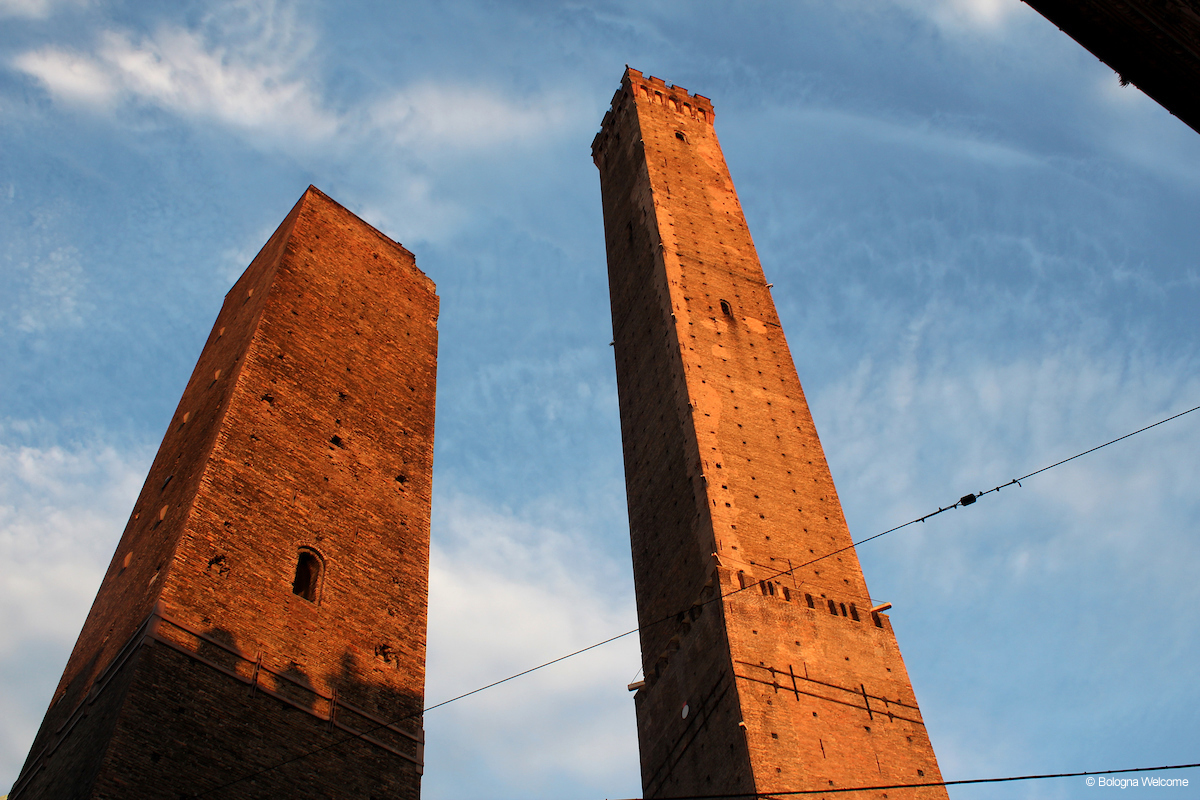
The two towers are Bologna's symbol of Bologna and stand in the heart of the city at the entry point of the ancient Via Emilia. Built during the Middle Ages, they had a military function (for signalling and defence) and represented, with their grandeur, the social prestige of the family responsible for the construction.
At the moment, the two towers are not accessible to the public due to restoration work, but they can be admired in all their beauty from Piazza di Porta Ravegnana and the surrounding streets.
Asinelli Tower
Built between 1109 and 1119 by the family of the same name, the Asinelli Tower is famous for the 498 steps of its internal staircase, through which you reach the summit from which you can enjoy, from the height of its 97.20 meters, a spectacular view of the city.
Garisenda Tower
Built between 1109 and 1110 by the Garisendi family, the Garisenda Tower is only 47 metres high (originally it was 60, but it was lowered for fear of a future collapse in the mid-14th century). It is known for its steep slope, due to the subsidence of the ground and the foundations, a slope that led to it being cited by Dante in the XXXI Canto of the Inferno.
Sanctuary of San Luca
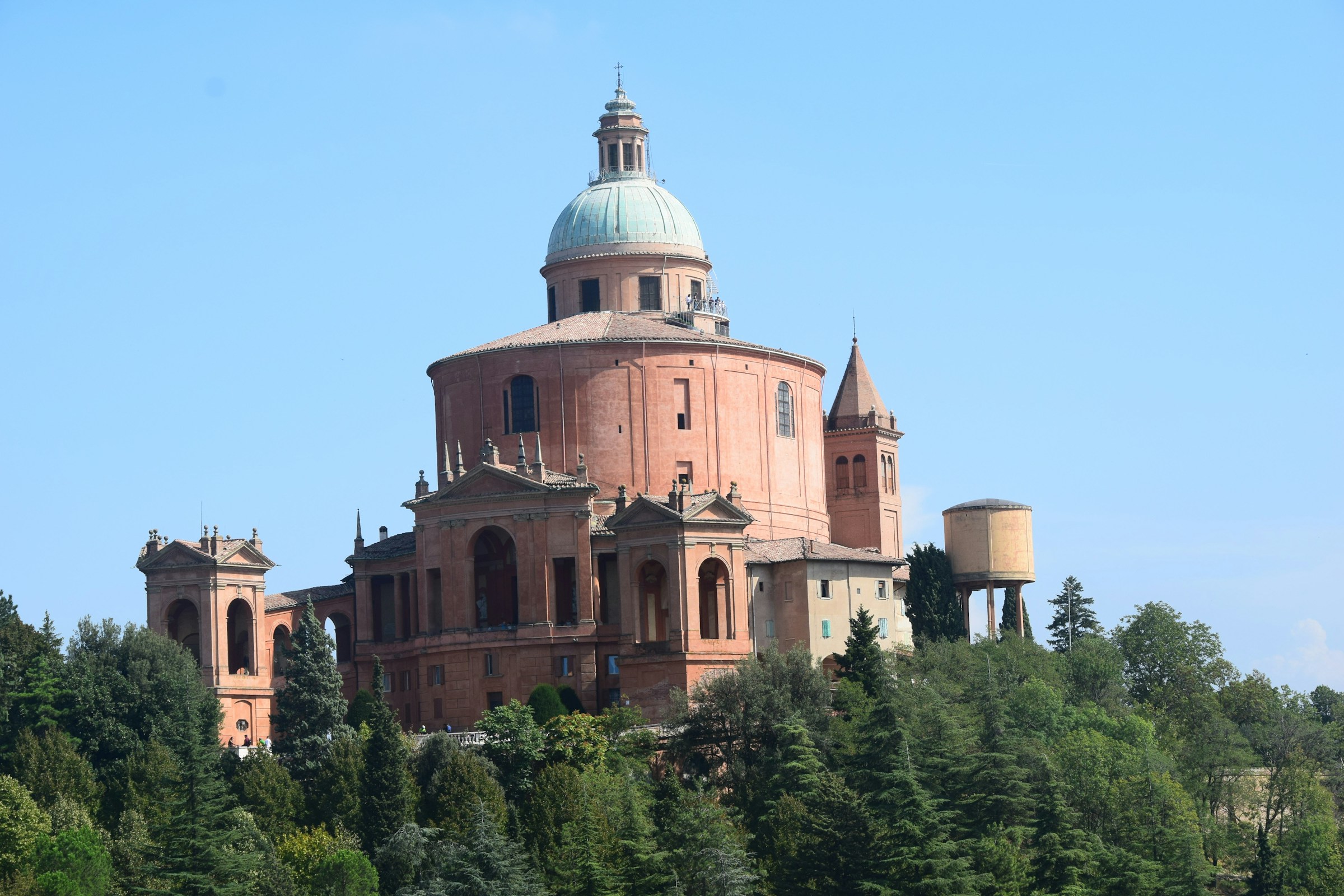 Built on the Colle della Guardia, the Sanctuary of San Luca has been the symbol of Bologna for centuries. It is famous for its 4 km portico which, with its over 600 arches, is the longest in the world and, together with the other porticoes of the city, was recently named a UNESCO World Heritage Site. From the Sanctuary of San Luca, you can enjoy a wonderful view of the surrounding landscape.
Clock Tower
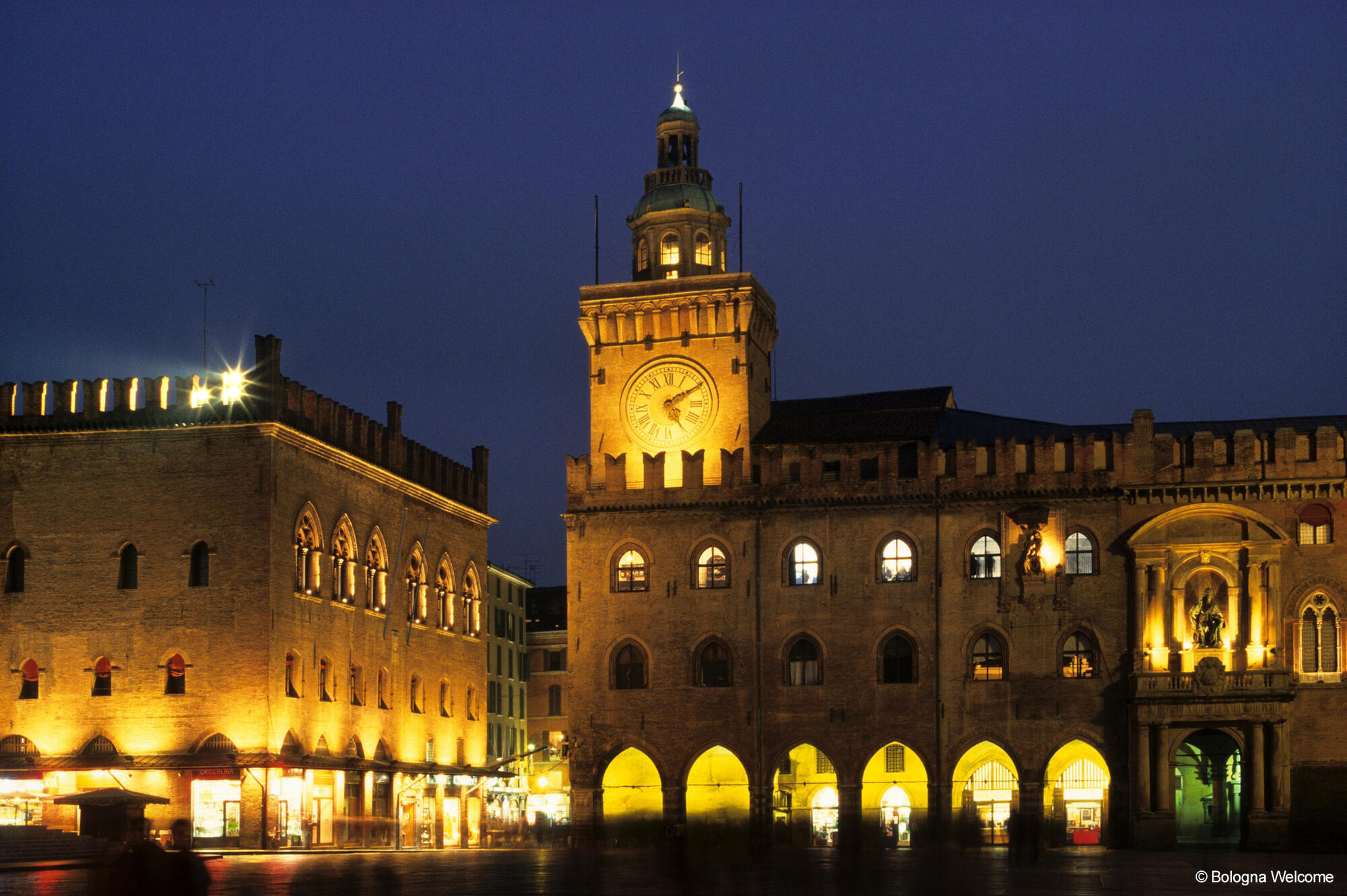
Located in Piazza Maggiore, the Clock Tower is one of the most characteristic monuments in the center of Bologna. Its original name, Torre Accursi, dates back to its first owner, the illustrious jurist of Florentine origins Accursio, who had this building erected so that it could become his home, purchased by the Municipality following his death. A visit to the interior of the Clock Tower, the discovery of the clock mechanism and the opportunity to enjoy some suggestive views of Bologna are not to be missed.
National Gallery of Bologna
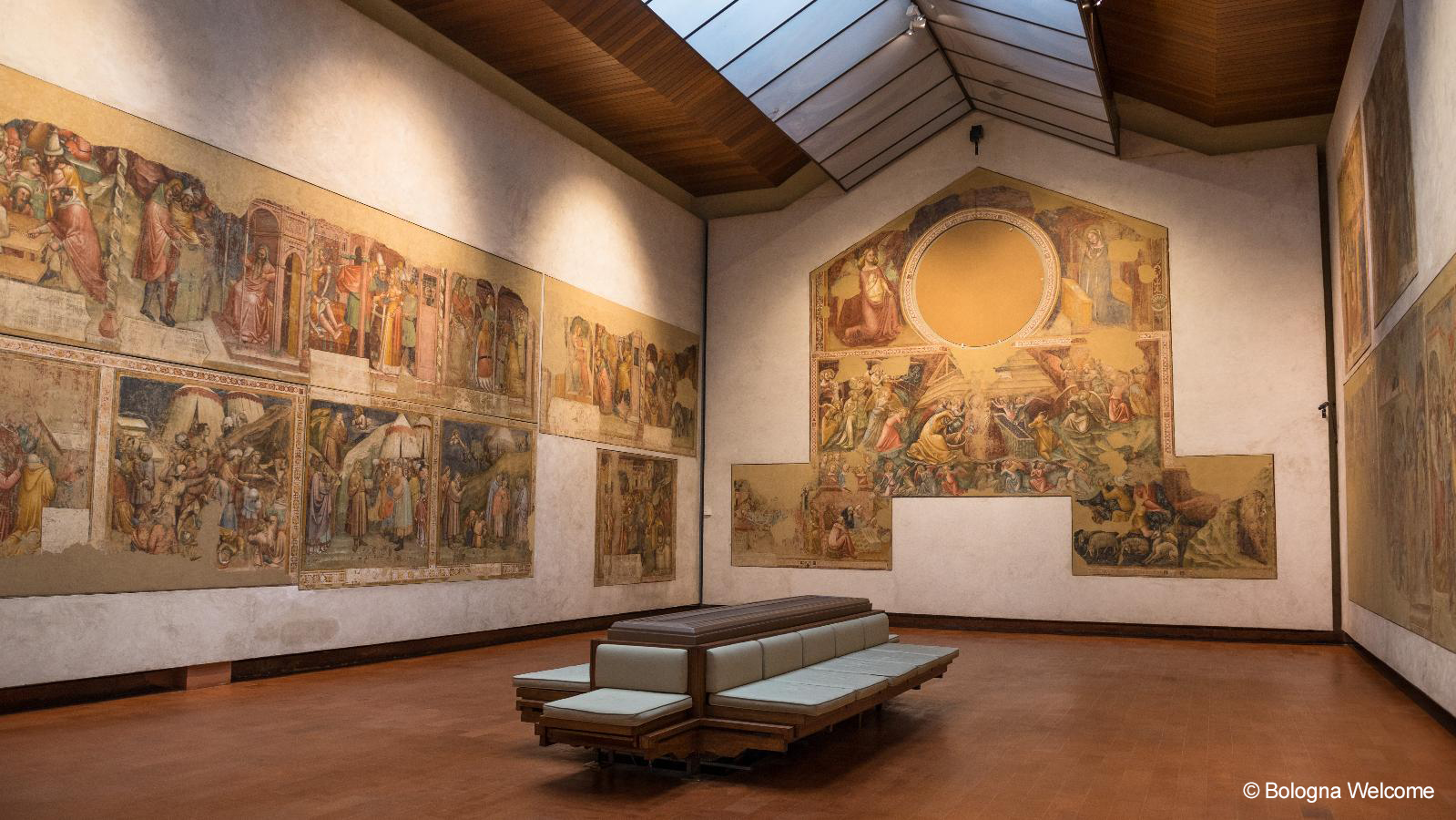
Located a few steps from the Two Towers, the Pinacoteca Nazionale di Bologna is one of the most modern and important National Galleries. Inside are the works of some of the most important Italian artists such as Raphael, Perugino, Giotto, Tintoretto, Titian, Caracci, Guercino and Reni. In addition to its permanent exhibition, the Pinacoteca also hosts temporary exhibitions of medium and large scope, educational activities, seminars and conferences.
Basilica of San Petronio
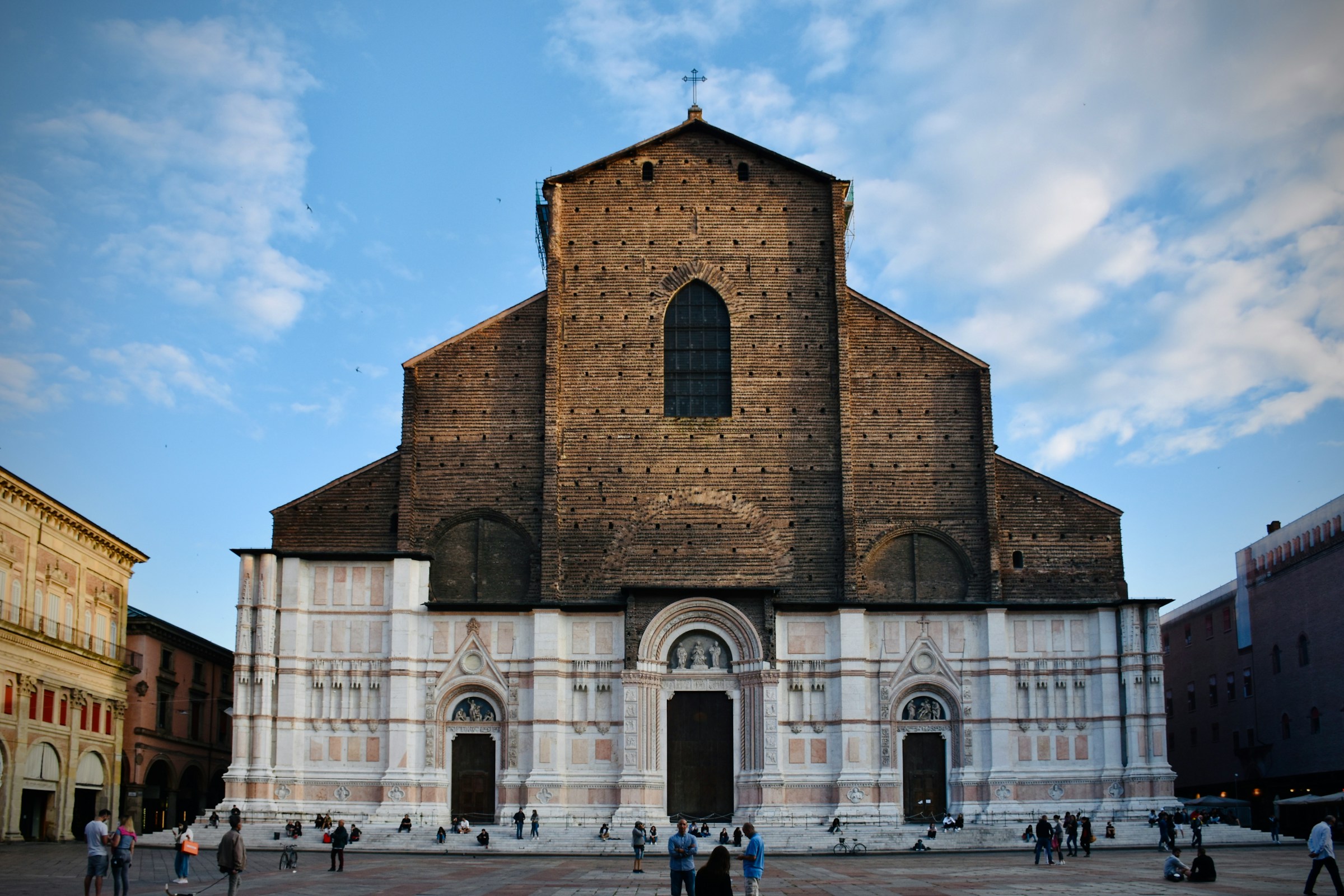
Overlooking Piazza Maggiore, the Basilica of San Petronio, dedicated to the city's patron saint, is the largest and most important church in Bologna. Inside is the famous sundial by the astronomer Cassini, which at 67.27 meters is the longest in the world. Its unfinished façade, partially covered in marble, is one of the consequences of the halt to construction work that, according to legend, was imposed by Pius IV to prevent the basilica from exceeding the size of St. Peter's in Rome.
Archiginnasio - Anatomical Theatre
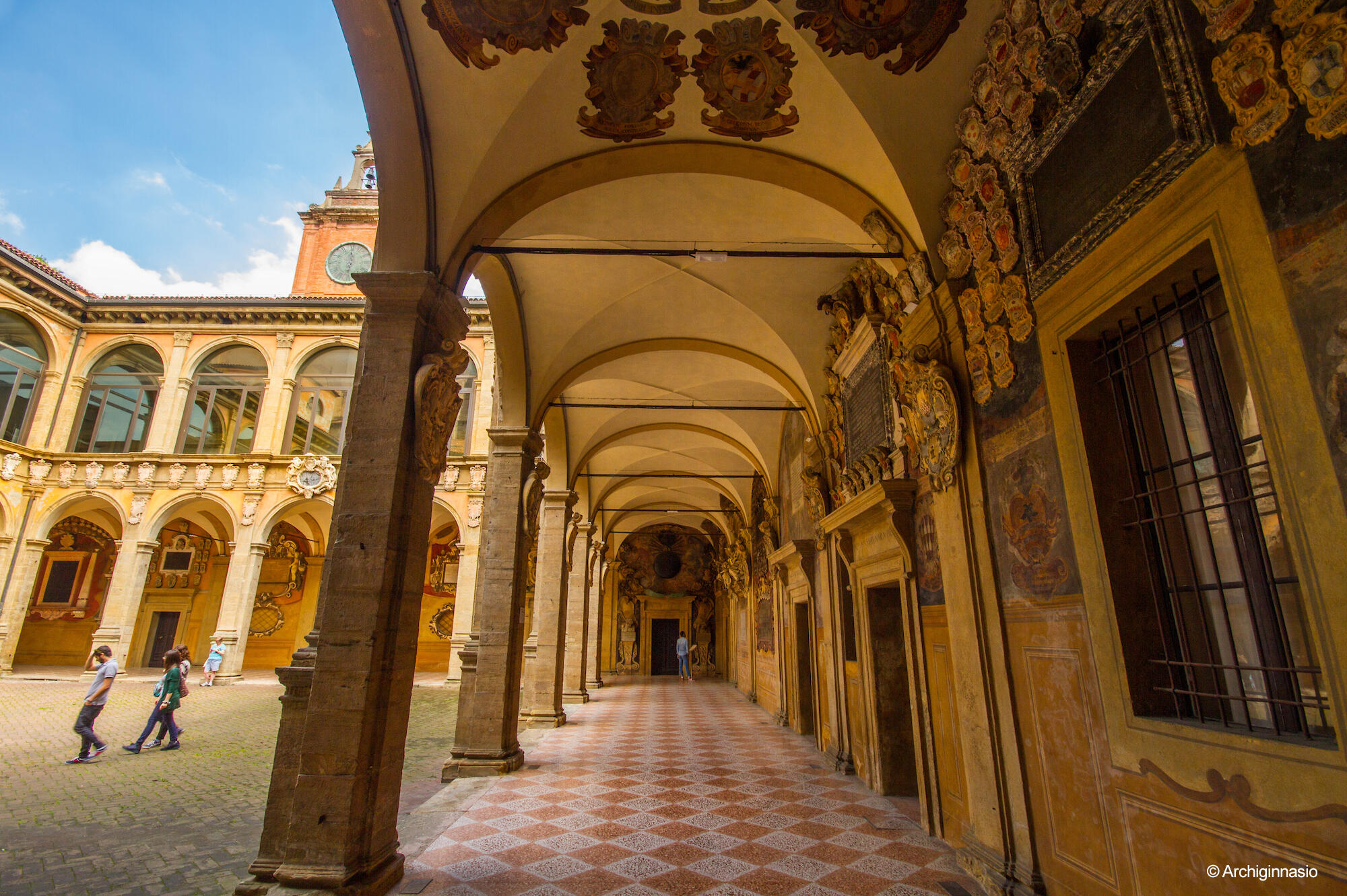
Located in the heart of the historic center, the Palazzo dell’Archiginnasio is one of the most significant buildings in Bologna and, since 1838, has housed the Municipal Library. The Palace was built by Cardinal Borromeo between 1562 and 1563 as the seat of the University (until 1803). Inside is the famous Anatomical Theater, built in carved wood by Antonio Levante in 1637 for the teaching of anatomy.
Metropolitan Cathedral of Saint Peter
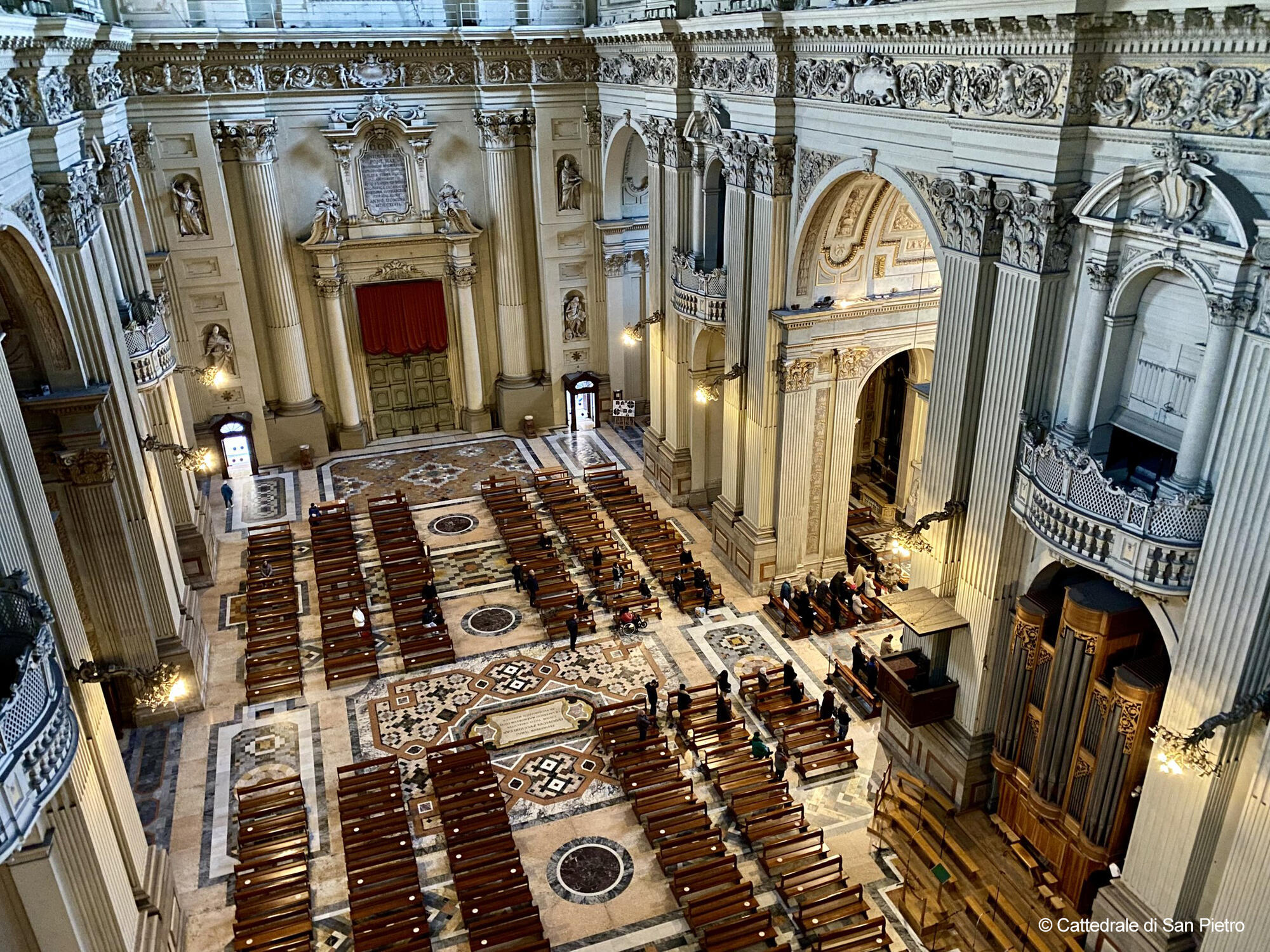
It's the city's cathedral, elevated to the title of "Metropolitan" in 1582 by Pope Gregory XIII who conferred the dignity of archiepiscopal to the diocese of Bologna. The cathedral's bell tower is the second tallest tower in the city (70 meters) and its bell chamber houses the largest bell that can be rung "alla bolognese" (in a cadenced manner and with a complete rotation of the bell).